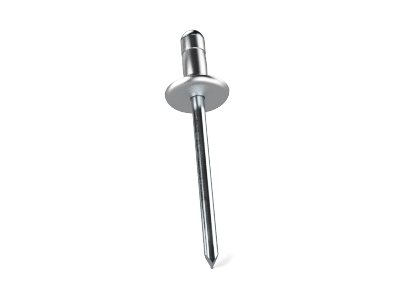
Dome Head Open Ended Breakstem Rivet The Blind Rivet consists of a mandrel with a head and a rivet body that sits over it. The “Blind” side is where you have no access to the back of the sheeet where it expands. For applications where the back side of job cannot be accessed Most commonly used Rivet in the industry. Low cost and versatile
BLIND RIVET A fastener that is installed from one side, that holds two or more pieces of material together typically in sheet metal applications Low Installed Cost: The ease of assembly and speed at which the rivets are installed will reduce the final in-place cost of the product manufactured. Blind Installation: The ability to place breakstem rivets from only one side of the workpiece increases the speed and efficiency of the assembly. Permanent, Reliable Fastening: Blind rivets securely assemble applications and provide a vibration resistant joint. They will not work loose like threaded fasteners. Lightweight Ergonomic Tooling: Tooling has been designed with the operator in mind. Torque reliant tooling may cause Carpal Tunnel Syndrome or other repetitive motion injuries. Installation: The installation of blind rivets is easily accomplished with the use of either hand or power riveters. The rivet is inserted into the prepared hole. As the stem is pulled by a rivet tool, the blind portion of the rivet expands radially and pulls the application material firmly together. When the rivet is fully expanded, the stem breaks and the installation process is complete. Selecting the Proper Fastener: Select a rivet group that meets the shear and tensile requirements for the application Select a rivet material that is compatible with the materials being joined. As a general rule the rivet material should have the same physical and mechanical properties as those being joined. Using a dissimilar material may cause joint failure due to either material fatigue or galvanic corrosion. Determine the type of head style required based upon the application material and hole preparation Measure the thickness of the material to be joined (grip) and prepare the hole for the proper diameter of the rivet